If you disagree with someone on the right, they think you are naive and childish. If you disagree with someone on the left, they think you are evil and uneducated.
Thomas Sowell sums it up perfectly with this diagnosis alone. The US economist, once a Marxist, analysed the thought patterns of a self-appointed elite – the ‘anointed’ – back in 1995 in ‘The Vision of the Anointed’. Among his more than 40 books, his political works stand out alongside ‘Basic Economics’, which is why he has been rediscovered among young conservatives.
Sowell distinguishes between two worldviews: the constrained and the unconstrained. These correspond to an instinct, an innate predisposition that defines one’s values and political stance.
The tragic argument is based on the tragedy of human existence. In the sense of the ancient Greeks, it is a fate that is inherent in the nature of things and of human beings. Politics therefore serves not the purpose of achieving self-fulfilment, but rather that of resolving conflicts.
The utopian vision believes in the ability to perfect humanity through intelligent planning and far-reaching reforms, based on Jean-Jacques Rousseau’s premise: ‘Man is inherently good’ and ‘Man is born free, and everywhere he is in chains. ’Only the current institutions are wrong and must be replaced, because it is only a question of intention! The tool for achieving this is politics.
Proponents of the tragic view doubt whether a select few – themselves included – know enough to control experiments. Even Isaac Newton had to admit: ‘If I have seen further, it is by standing on the shoulders of giants.’ Our values are crystallised wisdom from the laboratory of history. Conservatives build institutions around reality and strive for gradual improvements, as the writer and philosopher Edmund Burke confirms: ‘We cannot change the Nature of things and of men – but must act upon them the best we can.’ This does not result in rapid progress. But the success of Switzerland, for example, which has institutionalised this vision, speaks for itself.
Energy policy provides an example of how good intentions can fail in the face of reality. Sowell warned early on: ‘What is dangerous is will and power without knowledge – and for many expansive purposes, knowledge is inherently inadequate.’ People pointed out bottlenecks, but no one could have predicted that the grid would collapse in Spain. How could they? Instinctively, people knew that the system, like so many things in life, was too complex. The financial market, which combines the aggregated knowledge of countless participants, avoids wind turbines without subsidies for good reason.
According to Sowell, the excuse used by do-gooders is always the same. Without intervention, things would have been even worse. Failed results are seen as proof that even more effort (tax money) is needed. If this is not enough, energy consumption should be reduced. But never the original enthusiasm of the anointed.
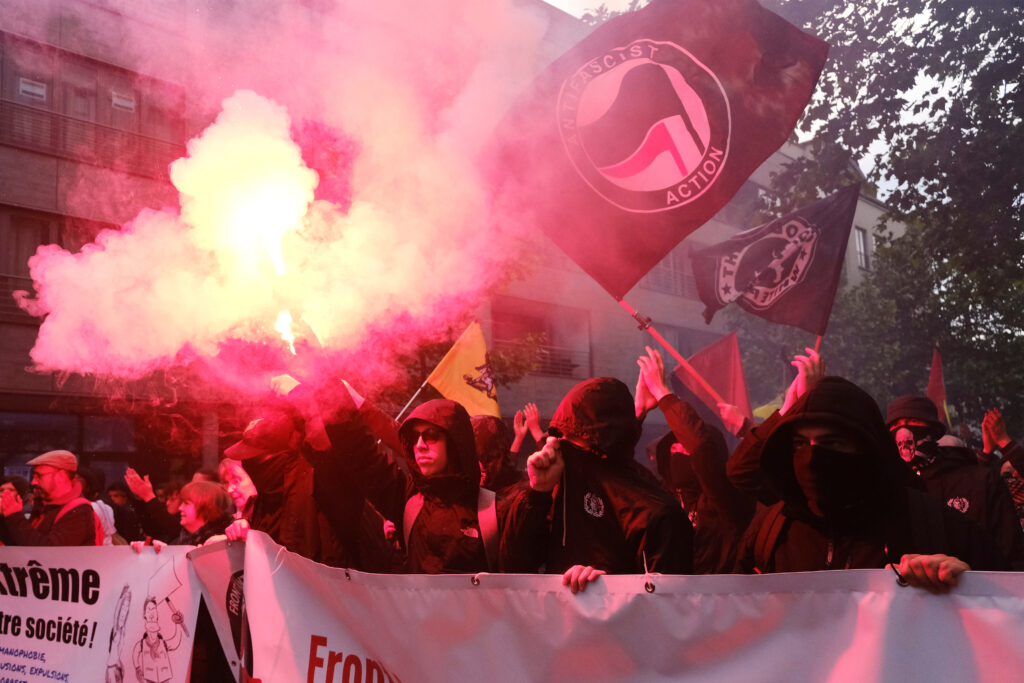
For many in the conservative milieu, it is not considered appropriate to argue about politics. As a result, it is almost exclusively left-wingers who take part in demonstrations. Conservatives instead concentrate on their own immediate environment, which they can influence. Politics is a necessary evil, which is why mental energy is wasted only on filling out election forms. This milieu cannot be mobilised after work. People vote, they work and they grumble quietly. Sowell accurately describes this asymmetry.
It is emotionally more satisfying to be in favour of something ‘good’. The trade-off that follows is irrelevant. The question of intention overshadows the question of reality. As a ‘bad’ right-winger who doesn’t want everything that sounds good because you disagree with the methodology, it’s difficult to convey a nuanced argument to the public in the left-leaning media landscape with its battle cries such as ‘The right-wingers are against human rights’.
Government bailouts of systemically important banks such as Credit Suisse are rare but significant events that can be capitalised on. The free market economy has no PR machine, and so it is forgotten that every day, anonymously and modestly, the invisible hand accumulates more wealth over decades than a crisis can destroy in a weekend.
The ‘good’ mobilises easily. A message in the Young Socialists’ chat is enough to block the entrance to UBS. For them, politics is their identity. Campaigning is every day, every week and every year. As Margaret Thatcher said: ‘The one thing about left-wing politicians is they are always fanatical. They never let go. It’s their religion. They go on and on.’ At the extreme end, it turns into revolution.
Even the Beatles warned the ’68 movement in their song ‘Revolution’: ‘But when you talk about destruction […] don’t you know that you can count me out!’ But for the do-gooders, it’s clear: the deconstruction of existing structures is necessary for a progressive future! Have you noticed that activists only throw tomato soup at classical art and never at postmodern installations? Classical art represents the tragic vision that seeks timeless beauty and order in an imperfect world. The opposite is true of EU buildings: postmodern glass monsters in the style of their visionaries are historically empty. Since Europe’s history is bloody, it is being erased using tabula rasa methodology in order to force a clear conscience.
In Switzerland there is a desire to cast off old virtues, too. The new national day is 12 September, the day on which the Federal Constitution came into force. Federal Councillor Beat Jans even proclaims: ‘The EU treaty package is like the Rütli oath.’ Anything that came before is considered old and outdated. Ultimately, freedom of expression suffers as a result of this utopian certainty.
Tragic figures know that people pursue their own interests and that no one possesses ultimate wisdom. They let them do their thing and build structures that set boundaries. Utopians say that there is good and evil. Their own intentions are morally pure, so logically the other side is ‘evil’. For example, anyone who opposes supranational organisations with good intentions and nice-sounding names (but no results) can only be evil. A ‘naive’ realism – but with missionary enthusiasm. Trumpism, with Truth Social as the absolute authority on truth, is no better in this respect. How I long for Reagan and Thatcher to return!
Conservatives see laws as a necessary evil – a tragic admission of our imperfection. Their approach is the militia system, which reduces political activism by limiting its scope and instead promotes prioritisation of relevant core issues. And federalism, which tackles problems directly at their source and restrains local decision-makers by giving them a skin in the game.
In the utopian vision, the good-natured individuals who consider themselves ‘called’ must steer the fortunes of society, as John Stuart Mill already articulated: ‘[No] democracy… ever did or could rise above mediocrity, except in so far as the sovereign Many have let themselves be guided […] by the counsels […] of a more highly gifted […] One or Few.’ It is therefore legitimate to hold special sessions, because the more the anointed consult with each other, the better for society. Where professional politics becomes a moral mission, Brussels stands ready.
What began as a good peace project has mutated into an institutionalised ideal: boundless in its aspirations, control and self-assurance. The same goes for the anthem: ‘All men shall be brothers where thy gentle wing abides.’ The wing probably refers to the EU. A lack of results is never a design flaw, but rather an excuse to deepen one’s faith. If something isn’t working, we need more Europe! A perfect system, only constantly thwarted by reality.
This balancing act between utopian and tragic visions has accompanied humanity ever since it began to organise itself. Currently, the pendulum is swinging towards the tragic side, as it always has in times of uncertainty. Today’s voters are doing only one thing: instinctively turning to what works – so banal.
There were outstanding social democratic politicians – the likes of whom are currently only found in Scandinavia – such as Willy Brandt and Helmut Schmidt, who recognised human imperfection, exercised caution in their interventions and adhered to Ludwig Erhard’s social market economy.
One thing is clear: we need optimistic visions. Nobody wants a world full of cynical naysayers. But as Sowell recognises, for the ‘anointed’ their vision is an axiom, not a hypothesis that can be refuted.
The burden of proof must be reversed: it is not the critics who must prove that a measure will fail, but the originators who must provide evidence that the promised effect has actually been achieved. Subsidies could be subject to so-called sunset clauses: this means that once they expire, a review is carried out to determine whether the promised effect has been achieved. If not, the subsidy is withdrawn.
The ‘anointed’ want to save the world. We tragic figures want it to function. Sowell’s distinction is more relevant today than ever.
This article was first published in Schweizer Monat.
The Liberal Institute is delighted to hear from you.
LIBERALES INSTITUT
Scheideggstrasse 73
8038 Zürich, Schweiz
Tel.: +41 (0)44 364 16 66
institut@libinst.ch
INSTITUT LIBÉRAL
Boulevard de Grancy 19
1006 Lausanne, Suisse
Tel.: +41 (0)21 510 32 00
liberal@libinst.ch
ISTITUTO LIBERALE
Via Nassa 60
6900 Lugano, Svizzera
Tel.: +41 (0)91 210 27 90
liberale@libinst.ch
Receive information in German about current publications and events about once a month.